Description

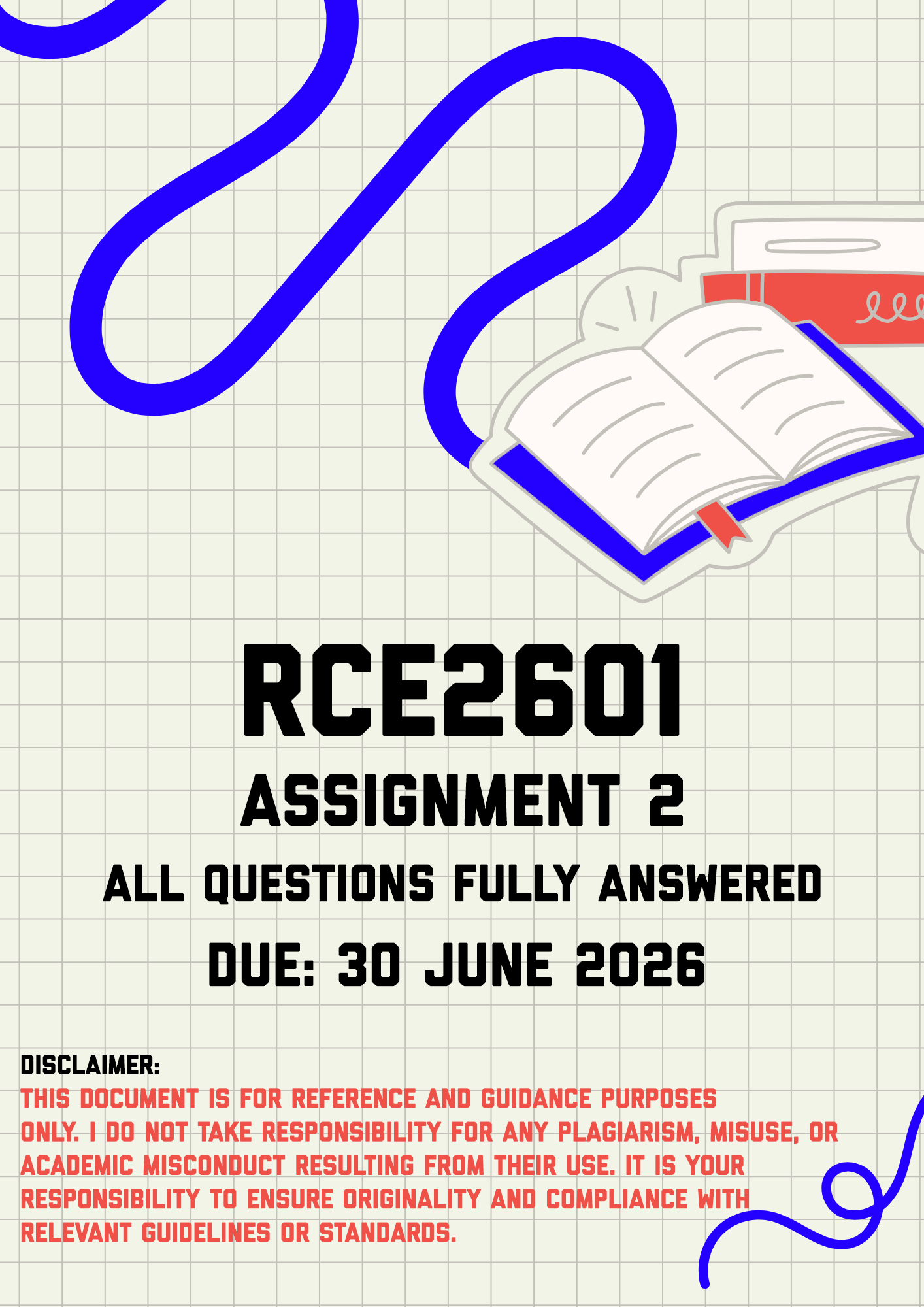
RCE2601 Assignment 2 Memo | Due 30 June 2026. All questions fully answered. QUESTION 1 (Inductive and Deductive Reasoning and Common Logical Fallacies)
1.1.
Categorise the following statements into inductive and deductive reasoning. Provide only the correct answer next to the question number. E.g. 1.1.11. Inductive reasoning.
1.1.1.
After reviewing several research articles, I noticed that studies with larger sample sizes tend to produce more reliable results; therefore, larger samples are generally better for research.
1.1.2.
All credible research studies are based on evidence. This study is based on evidence. Therefore, this study is credible.
1.1.3.
Most students who practice critical thinking exercises regularly improve their problem-solving skills, so regular practice likely strengthens critical reasoning abilities.
1.1.4.
If an argument contains logical fallacies, then it is weak. This argument contains logical fallacies. Therefore, this argument is weak.
1.1.5.
All valid conclusions must follow from the evidence presented. This conclusion does not follow from the evidence presented. Therefore, this conclusion is not valid.
Reviews

There are no reviews yet.

Be the first to review “RCE2601 Assignment 2 Memo | Due 30 June 2026”

Your email address will not be published. Required fields are marked *

Description

RCE2601 Assignment 2 Memo | Due 30 June 2026. All questions fully answered. QUESTION 1 (Inductive and Deductive Reasoning and Common Logical Fallacies)
1.1.
Categorise the following statements into inductive and deductive reasoning. Provide only the correct answer next to the question number. E.g. 1.1.11. Inductive reasoning.
1.1.1.
After reviewing several research articles, I noticed that studies with larger sample sizes tend to produce more reliable results; therefore, larger samples are generally better for research.
1.1.2.
All credible research studies are based on evidence. This study is based on evidence. Therefore, this study is credible.
1.1.3.
Most students who practice critical thinking exercises regularly improve their problem-solving skills, so regular practice likely strengthens critical reasoning abilities.
1.1.4.
If an argument contains logical fallacies, then it is weak. This argument contains logical fallacies. Therefore, this argument is weak.
1.1.5.
All valid conclusions must follow from the evidence presented. This conclusion does not follow from the evidence presented. Therefore, this conclusion is not valid.
Reviews

There are no reviews yet.

Be the first to review “RCE2601 Assignment 2 Memo | Due 30 June 2026”

Your email address will not be published. Required fields are marked *

About this RCE2601 resource

This downloadable Assignment Memo is listed for the UNISA module RCE2601. Review the document title, description, seller information, price and learner reviews before purchasing to make sure it matches your current module requirements.

StudyPass helps distance-learning students search by module code and discover notes, revision material and study resources shared by independent sellers. Always compare the resource details with your latest official UNISA tutorial letters and assessment instructions.

Search for another UNISA module code or visit the UNISA Study Hub for practical distance-learning and exam-preparation tips.

0
    0
    Your Shopping Cart
    Your cart is emptyReturn to Shop