Description

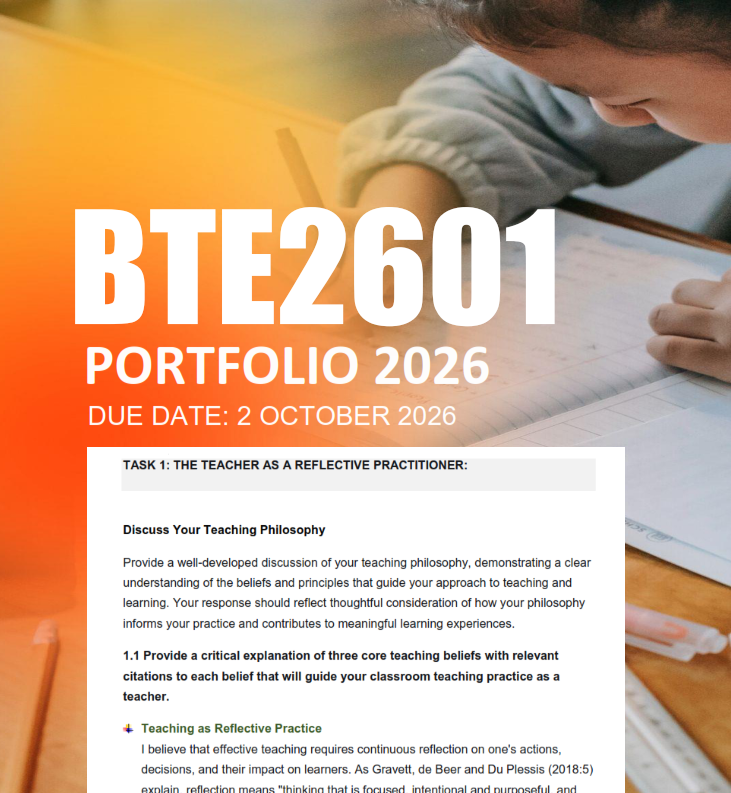
BTE2601 PORTFOLIO 2026
DUE 2 OCTOBER 2026

TASK 1: THE TEACHER AS A REFLECTIVE PRACTITIONER:

Discuss Your Teaching Philosophy
Provide a well-developed discussion of your teaching philosophy, demonstrating a clear
understanding of the beliefs and principles that guide your approach to teaching and
learning. Your response should reflect thoughtful consideration of how your philosophy
informs your practice and contributes to meaningful learning experiences.
1.1 Provide a critical explanation of three core teaching beliefs with relevant
citations to each belief that will guide your classroom teaching practice as a
teacher.


1.2 Evaluation of How These Beliefs Influence Classroom Decisions and Practices
Teaching as Reflective Practice
This belief will influence my classroom decisions by encouraging me to constantly
evaluate my teaching methods and their effectiveness. I will regularly ask myself
questions such as: “What exactly has happened in my lesson?”, “What could be the


TASK 2: TEACHER AS A CARING PRACTITIONER

Pedagogy of Care
A pedagogy of care refers to a teaching approach where teachers commit to being
accountable and responsible for creating learning environments in which care can be
expressed in a responsible way (Petersen and Osman, 2018:30). As Noddings


TASK 3: THE TEACHER AS AN EDUCATIONAL THEORIST

As a classroom teacher, I applied Behaviourist principles by establishing clear
expectations for behaviour and learning, using consistent reinforcement strategies to
shape learner behaviour, and creating a structured learning environment. According to


Reviews

There are no reviews yet.

Be the first to review “BTE2601 Portfolio Semester 2 2026 – Due 2 October 2026”

Your email address will not be published. Required fields are marked *

Description

BTE2601 PORTFOLIO 2026
DUE 2 OCTOBER 2026

TASK 1: THE TEACHER AS A REFLECTIVE PRACTITIONER:

Discuss Your Teaching Philosophy
Provide a well-developed discussion of your teaching philosophy, demonstrating a clear
understanding of the beliefs and principles that guide your approach to teaching and
learning. Your response should reflect thoughtful consideration of how your philosophy
informs your practice and contributes to meaningful learning experiences.
1.1 Provide a critical explanation of three core teaching beliefs with relevant
citations to each belief that will guide your classroom teaching practice as a
teacher.


1.2 Evaluation of How These Beliefs Influence Classroom Decisions and Practices
Teaching as Reflective Practice
This belief will influence my classroom decisions by encouraging me to constantly
evaluate my teaching methods and their effectiveness. I will regularly ask myself
questions such as: “What exactly has happened in my lesson?”, “What could be the


TASK 2: TEACHER AS A CARING PRACTITIONER

Pedagogy of Care
A pedagogy of care refers to a teaching approach where teachers commit to being
accountable and responsible for creating learning environments in which care can be
expressed in a responsible way (Petersen and Osman, 2018:30). As Noddings


TASK 3: THE TEACHER AS AN EDUCATIONAL THEORIST

As a classroom teacher, I applied Behaviourist principles by establishing clear
expectations for behaviour and learning, using consistent reinforcement strategies to
shape learner behaviour, and creating a structured learning environment. According to

Reviews

There are no reviews yet.

Be the first to review “BTE2601 Portfolio Semester 2 2026 – Due 2 October 2026”

Your email address will not be published. Required fields are marked *

About this BTE2601 resource

This downloadable Portfolio Study Resource is listed for the UNISA module BTE2601. Review the document title, description, seller information, price and learner reviews before purchasing to make sure it matches your current module requirements.

StudyPass helps distance-learning students search by module code and discover notes, revision material and study resources shared by independent sellers. Always compare the resource details with your latest official UNISA tutorial letters and assessment instructions.

Search for another UNISA module code or visit the UNISA Study Hub for practical distance-learning and exam-preparation tips.

0
0
Your Shopping Cart
Your cart is emptyReturn to Shop