Description

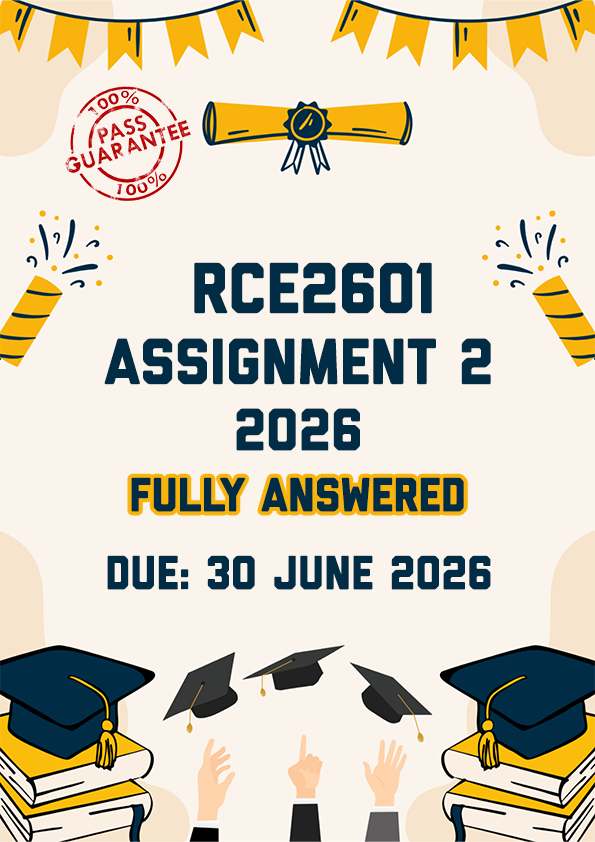
RCE2601 Assignment 2 Memo | Due 30 June 2026. All questions fully answered. QUESTION 1 (Inductive and Deductive Reasoning and Common Logical Fallacies)
1.1.
Categorise the following statements into inductive and deductive reasoning. Provide only the correct answer next to the question number. E.g. 1.1.11. Inductive reasoning.
1.1.1.
After reviewing several research articles, I noticed that studies with larger sample sizes tend to produce more reliable results; therefore, larger samples are generally better for research.
1.1.2.
All credible research studies are based on evidence. This study is based on evidence. Therefore, this study is credible.
1.1.3.
Most students who practice critical thinking exercises regularly improve their problem-solving skills, so regular practice likely strengthens critical reasoning abilities.
1.1.4.
If an argument contains logical fallacies, then it is weak. This argument contains logical fallacies. Therefore, this argument is weak.
1.1.5.
All valid conclusions must follow from the evidence presented. This conclusion does not follow from the evidence presented. Therefore, this conclusion is not valid.

Reviews

There are no reviews yet.

Only logged in customers who have purchased this product may leave a review.

Description

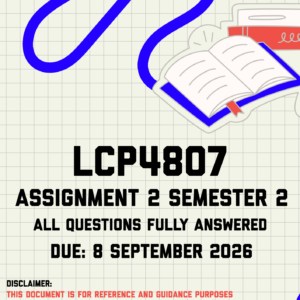
RCE2601 Assignment 2 Memo | Due 30 June 2026. All questions fully answered. QUESTION 1 (Inductive and Deductive Reasoning and Common Logical Fallacies)
1.1.
Categorise the following statements into inductive and deductive reasoning. Provide only the correct answer next to the question number. E.g. 1.1.11. Inductive reasoning.
1.1.1.
After reviewing several research articles, I noticed that studies with larger sample sizes tend to produce more reliable results; therefore, larger samples are generally better for research.
1.1.2.
All credible research studies are based on evidence. This study is based on evidence. Therefore, this study is credible.
1.1.3.
Most students who practice critical thinking exercises regularly improve their problem-solving skills, so regular practice likely strengthens critical reasoning abilities.
1.1.4.
If an argument contains logical fallacies, then it is weak. This argument contains logical fallacies. Therefore, this argument is weak.
1.1.5.
All valid conclusions must follow from the evidence presented. This conclusion does not follow from the evidence presented. Therefore, this conclusion is not valid.
Reviews

There are no reviews yet.

Only logged in customers who have purchased this product may leave a review.

0
    0
    Your Shopping Cart
    Your cart is emptyReturn to Shop