Description


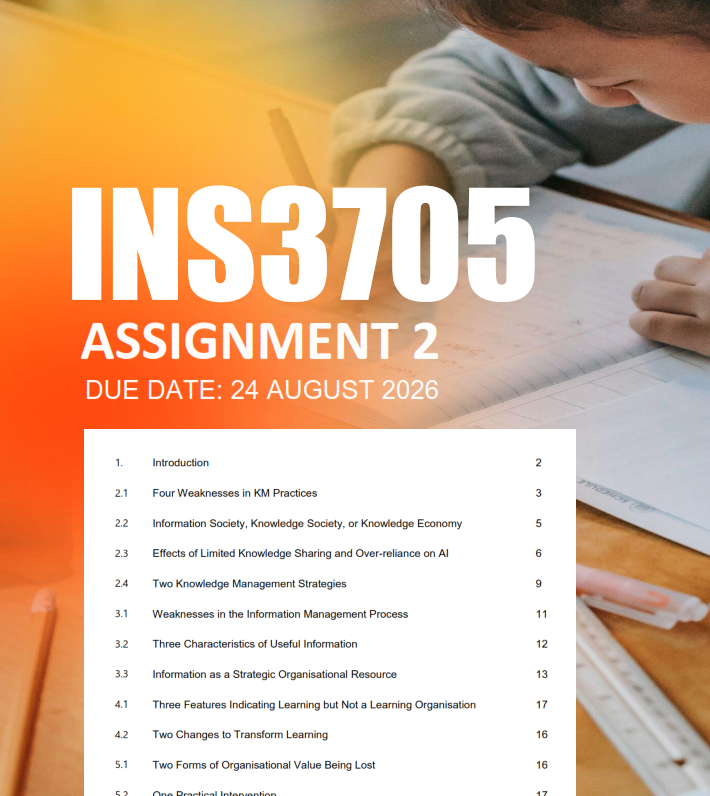
QUESTION 1: (40 MARKS)
SCENARIO
A large South African organisation has invested heavily in advanced digital
systems, including artificial intelligence and data-driven decision-support tools, to
support daily operations and strategic decision-making. While these systems
generate sophisticated outputs, only a small group of specialists understand how
knowledge is created, interpreted, and applied within the organisation. Most
employees rely uncritically on system recommendations without understanding the
assumptions or reasoning behind them. Knowledge sharing across departments is
limited, expert insights are rarely documented, and critical know-how remains
embedded in individuals. When experienced employees are absent or leave the


organisation, performance declines and decision-making continuity is disrupted.
This situation highlights the organisation’s dependence on individual expertise and
technology, raising concerns about sustainable knowledge management,
organisational learning, and long-term resilience
1.1 Analyse FOUR weaknesses in the organisation’s Knowledge Management
practices. For each weakness, identify the Knowledge Management
process that is most affected and justify your answer using relevant
Knowledge Management theories and scholarly literature.
(20 marks)
1.2 Using the scenario, determine whether the organisation operates
predominantly within an Information Society, Knowledge Society or
Knowledge Economy context, and justify your answer using evidence from
the scenario and relevant academic literature.

(5 marks)
1.3 Discuss how limited knowledge sharing and over-reliance on artificial
intelligence and individual expertise can affect organisational performance,
decision-making quality, and continuity. Support your discussion using
multiple academic sources.

(10 marks)
1.4 Propose TWO Knowledge Management strategies or interventions that
would reduce dependence on individuals while supporting the effective,
ethical and responsible use of Artificial Intelligence. Justify your proposals
with reference to relevant Knowledge Management literature.
(5 marks)
QUESTION 2: (25 MARKS)
SCENARIO
Managers in an organisation report that information systems regularly generate
reports, yet these reports do not support timely or effective decision-making.
 

Reviews

There are no reviews yet.

Be the first to review “INS3705 Assignment 2 Semester 2 2026 – Due 24 August 2026”

Your email address will not be published. Required fields are marked *

Description


QUESTION 1: (40 MARKS)
SCENARIO
A large South African organisation has invested heavily in advanced digital
systems, including artificial intelligence and data-driven decision-support tools, to
support daily operations and strategic decision-making. While these systems
generate sophisticated outputs, only a small group of specialists understand how
knowledge is created, interpreted, and applied within the organisation. Most
employees rely uncritically on system recommendations without understanding the
assumptions or reasoning behind them. Knowledge sharing across departments is
limited, expert insights are rarely documented, and critical know-how remains
embedded in individuals. When experienced employees are absent or leave the


organisation, performance declines and decision-making continuity is disrupted.
This situation highlights the organisation’s dependence on individual expertise and
technology, raising concerns about sustainable knowledge management,
organisational learning, and long-term resilience
1.1 Analyse FOUR weaknesses in the organisation’s Knowledge Management
practices. For each weakness, identify the Knowledge Management
process that is most affected and justify your answer using relevant
Knowledge Management theories and scholarly literature.
(20 marks)
1.2 Using the scenario, determine whether the organisation operates
predominantly within an Information Society, Knowledge Society or
Knowledge Economy context, and justify your answer using evidence from
the scenario and relevant academic literature.

(5 marks)
1.3 Discuss how limited knowledge sharing and over-reliance on artificial
intelligence and individual expertise can affect organisational performance,
decision-making quality, and continuity. Support your discussion using
multiple academic sources.

(10 marks)
1.4 Propose TWO Knowledge Management strategies or interventions that
would reduce dependence on individuals while supporting the effective,
ethical and responsible use of Artificial Intelligence. Justify your proposals
with reference to relevant Knowledge Management literature.
(5 marks)
QUESTION 2: (25 MARKS)
SCENARIO
Managers in an organisation report that information systems regularly generate
reports, yet these reports do not support timely or effective decision-making.


Reviews

There are no reviews yet.

Be the first to review “INS3705 Assignment 2 Semester 2 2026 – Due 24 August 2026”

Your email address will not be published. Required fields are marked *

About this INS3705 resource

This downloadable Assignment Study Resource is listed for the UNISA module INS3705. Review the document title, description, seller information, price and learner reviews before purchasing to make sure it matches your current module requirements.

StudyPass helps distance-learning students search by module code and discover notes, revision material and study resources shared by independent sellers. Always compare the resource details with your latest official UNISA tutorial letters and assessment instructions.

Search for another UNISA module code or visit the UNISA Study Hub for practical distance-learning and exam-preparation tips.

0
    0
    Your Shopping Cart
    Your cart is emptyReturn to Shop