Description

Case Study: Emotional and Behavioural Difficulties in a South African School Context
Lerato is a 13-year-old Grade 7 learner attending a public school in Soweto, Johannesburg. In
recent months, educators have observed a noticeable decline in Lerato’s academic
performance, accompanied by frequent emotional outbursts in the classroom. Lerato appears
increasingly frustrated, struggles with emotional self-regulation, and has withdrawn from
interactions with peers. Teachers have reported several incidents where Lerato raises their
voice at classmates and refuses to engage in group-based activities.
These concerns became more pronounced after Lerato’s family encountered a significant
financial setback. Lerato’s mother, who previously provided the primary household income,
lost her job. Consequently, the family was forced to move into a smaller dwelling within an
informal settlement. This sudden change has disrupted Lerato’s routine, contributing to
heightened anxiety and defensive behaviour.


principles with Behavioural Interventions to help support Lerato’s emotional well-being and
classroom engagement.
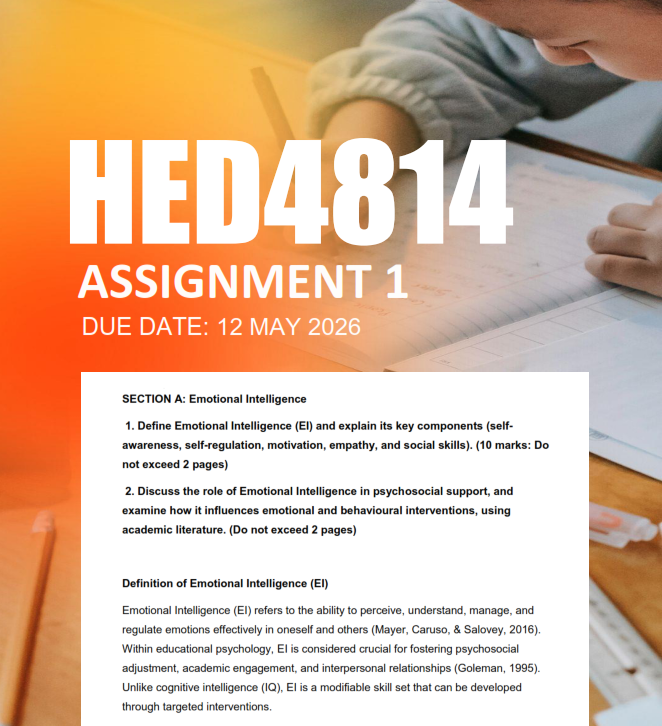
SECTION A: Emotional Intelligence (20 Marks)
1. Define Emotional Intelligence (EI) and explain its key components (self-awareness,
self-regulation, motivation, empathy, and social skills).
(10 marks: Do not exceed 2 pages)
2. Discuss the role of Emotional Intelligence in psychosocial support, and examine how
it influences emotional and behavioural interventions, using academic literature.
(10 marks: Do not exceed 2 pages)
RUBRIC — Section A


Case Study: Emotional and Behavioural Difficulties in a South African School Context
Lerato is a 13-year-old Grade 7 learner attending a public school in Soweto, Johannesburg. In
recent months, educators have observed a noticeable decline in Lerato’s academic
performance, accompanied by frequent emotional outbursts in the classroom. Lerato appears
increasingly frustrated, struggles with emotional self-regulation, and has withdrawn from
interactions with peers. Teachers have reported several incidents where Lerato raises their
voice at classmates and refuses to engage in group-based activities.
These concerns became more pronounced after Lerato’s family encountered a significant
financial setback. Lerato’s mother, who previously provided the primary household income,
lost her job. Consequently, the family was forced to move into a smaller dwelling within an
informal settlement. This sudden change has disrupted Lerato’s routine, contributing to
heightened anxiety and defensive behaviour.


principles with Behavioural Interventions to help support Lerato’s emotional well-being and
classroom engagement.
SECTION A: Emotional Intelligence (20 Marks)
1. Define Emotional Intelligence (EI) and explain its key components (self-awareness,
self-regulation, motivation, empathy, and social skills).
(10 marks: Do not exceed 2 pages)
2. Discuss the role of Emotional Intelligence in psychosocial support, and examine how
it influences emotional and behavioural interventions, using academic literature.
(10 marks: Do not exceed 2 pages)
RUBRIC — Section A

Reviews

There are no reviews yet.

Only logged in customers who have purchased this product may leave a review.

Description

Case Study: Emotional and Behavioural Difficulties in a South African School Context
Lerato is a 13-year-old Grade 7 learner attending a public school in Soweto, Johannesburg. In
recent months, educators have observed a noticeable decline in Lerato’s academic
performance, accompanied by frequent emotional outbursts in the classroom. Lerato appears
increasingly frustrated, struggles with emotional self-regulation, and has withdrawn from
interactions with peers. Teachers have reported several incidents where Lerato raises their
voice at classmates and refuses to engage in group-based activities.
These concerns became more pronounced after Lerato’s family encountered a significant
financial setback. Lerato’s mother, who previously provided the primary household income,
lost her job. Consequently, the family was forced to move into a smaller dwelling within an
informal settlement. This sudden change has disrupted Lerato’s routine, contributing to
heightened anxiety and defensive behaviour.


principles with Behavioural Interventions to help support Lerato’s emotional well-being and
classroom engagement.
SECTION A: Emotional Intelligence (20 Marks)
1. Define Emotional Intelligence (EI) and explain its key components (self-awareness,
self-regulation, motivation, empathy, and social skills).
(10 marks: Do not exceed 2 pages)
2. Discuss the role of Emotional Intelligence in psychosocial support, and examine how
it influences emotional and behavioural interventions, using academic literature.
(10 marks: Do not exceed 2 pages)
RUBRIC — Section A
 

Case Study: Emotional and Behavioural Difficulties in a South African School Context
Lerato is a 13-year-old Grade 7 learner attending a public school in Soweto, Johannesburg. In
recent months, educators have observed a noticeable decline in Lerato’s academic
performance, accompanied by frequent emotional outbursts in the classroom. Lerato appears
increasingly frustrated, struggles with emotional self-regulation, and has withdrawn from
interactions with peers. Teachers have reported several incidents where Lerato raises their
voice at classmates and refuses to engage in group-based activities.
These concerns became more pronounced after Lerato’s family encountered a significant
financial setback. Lerato’s mother, who previously provided the primary household income,
lost her job. Consequently, the family was forced to move into a smaller dwelling within an
informal settlement. This sudden change has disrupted Lerato’s routine, contributing to
heightened anxiety and defensive behaviour.


principles with Behavioural Interventions to help support Lerato’s emotional well-being and
classroom engagement.
SECTION A: Emotional Intelligence (20 Marks)
1. Define Emotional Intelligence (EI) and explain its key components (self-awareness,
self-regulation, motivation, empathy, and social skills).
(10 marks: Do not exceed 2 pages)
2. Discuss the role of Emotional Intelligence in psychosocial support, and examine how
it influences emotional and behavioural interventions, using academic literature.
(10 marks: Do not exceed 2 pages)
RUBRIC — Section A

Reviews

There are no reviews yet.

Only logged in customers who have purchased this product may leave a review.

0
    0
    Your Shopping Cart
    Your cart is emptyReturn to Shop